Introduction to the IPG5-x:
IPG5-x stands for Inverter Platform Generation 5, and the “x” is the newest update where we’ve focused on flexibility for integration into a range of motors and transmissions, especially suited for high performance. As a standalone unit, the IPG5 800V SiC inverter weighs about 5.5 kilograms, with an output of >400 kVA, a huge improvement from our first generation IPG which weighed about 16 kilograms with 200 kilowatt output.

It can power electric motors to over 400 kW peak, 250 kW continuous, and it’s made primarily for automotive, but equally, we’ve seen interest in a variety of applications spanning motorsport, commercial, aviation, and marine.

Key features:
● Peak power density (mass) >85 kVA/kg
● Peak power density (volume) >125 kVA/L
● High-speed motor drive capability, electrical frequency up to 2.5 kHz
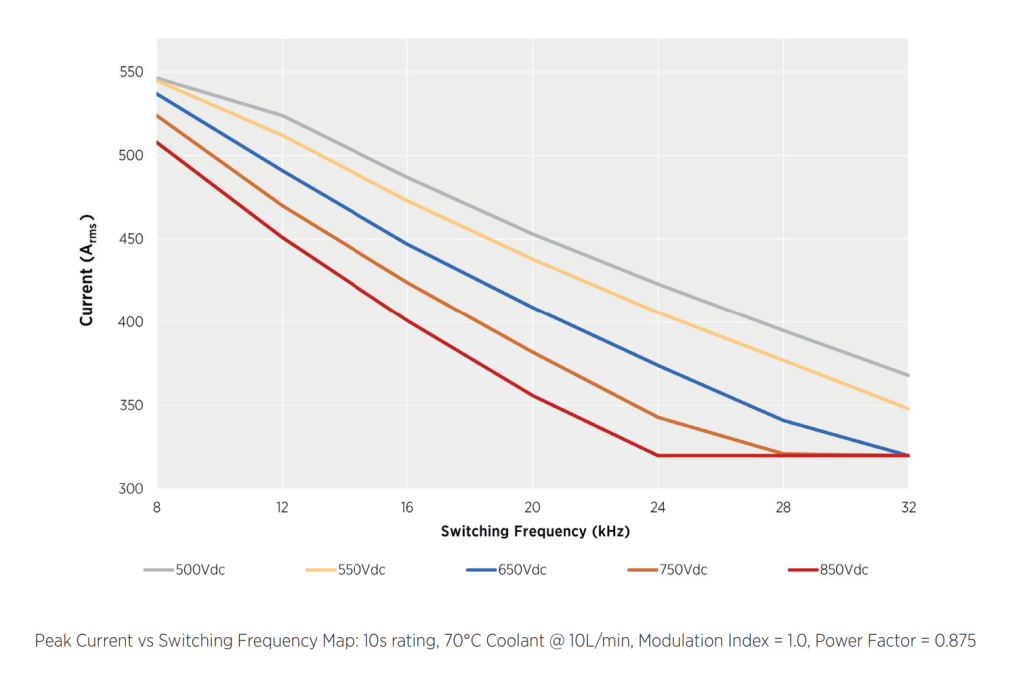
● Peak current 540Arms
● Variable switching frequency 1 – 32 kHz
● Dry mass – 5.5 kg
● Volume – 3.88 L
● Dimensions – 266.2 x 177.9 x 82 mm
Environmental/Cooling
● Water/glycol-cooled
● Max. coolant inlet temperature 70°C
● Min. coolant flow rate 10 L/min
● Max. coolant pressure 2 Bar Gauge
● Operating temperature range -40°C to +105°C
Performance and safety
● Efficiency 97% typical, 99% peak
● ISO 26262 capable, up to ASIL-D
● Integrated HVIL protection
Can you give us a quick background on McLaren Applied?
To those who aren’t aware, McLaren Applied is a spinoff from the McLaren Group, composed of the supercar OEM and race team, to push the limits of technology as a Tier 1 supplier. We have a deep history with motorsports, and that’s served as our fast-track proving grounds to push the limits of powertrain technology and bring that to the market. We were one of the first companies to use silicon carbide in Formula One with our IPG2, and since then, we’ve honed both the hardware and software of the inverter tech across multiple generations of automotive and motorsport supply.
If you look at the evolution of the EV market, the first wave (pioneering innovation, such as in the Tesla Roadster in 2008) and the second wave (with the OEM rush to market in 2018), most vehicles used ICE vehicle architectures with off-the-shelf electronic systems, typically with 400V IGBT based power electronics.
Fast forward to today, the third wave sees the market pushing for 800V for ultra-fast charging and silicon carbide for efficiency. Silicon carbide offers more range per kilowatt hour, less wasted heat so you can downsize cooling systems, and faster switching, allowing you to use smaller motors while maintaining power, which in turn creates a domino effect of cost, weight, packaging, and sustainability improvements.
Why the x update?
As OEMs evolve, so do their powertrain requirements. Although the standalone IPG5 product has had success, the high-volume OEMs are pushing for highly integrated powertrain systems.
The “x” in IPG5-x represents more of a platform update than a new product, focusing on increased flexibility, which can then be tailored to different applications by partnering with motor & transmission manufacturers to design overall EDU (electric drive unit) systems bespoke for the OEM. Different motor architectures and technologies have their strengths and weaknesses, which IPG5-x can be agnostic of, enabling a multitude of different drivetrain designs.
Some OEMs are still working with 400V systems, and for that, we’ve added variability features so they can use the IPG5-x and upgrade to 800V at a later date. For instance, it has a variable switching frequency and a two-speed gate driver, allowing us to tune the system to broaden the voltage operating window whilst minimizing sacrifices in performance.
What are engineers asking?
In the era of the software-defined vehicle, many engineers ask about the motor control software that we’ve developed. Our team has spent entire seasons in Formula 1 to hone 0.1% efficiency improvements, in the process developing very high-fidelity motor control. Looking forward, as more electric vehicles enter the market, we see that the 4th wave of electrification will develop around attribute differentiation. We leverage our motor control expertise in IPG5 to support this; delivering exacting torque control and offering the ability to refine the natural audible signature of the powertrain with our IP around variable switching frequency..
Entire powertrain departments at OEMs with expertise in traditional combustion powertrains have had to be upskilled in the transition to electrification. With that, we’re increasingly getting more nuanced questions, especially about EMC, which is a difficult art to master. When EMC issues arise, oftentimes you first look at the inverter. It’s important to be able to demonstrate that you have the right capacitance, chokes, and filters in place to minimize EMI.
Where in production are you?
For IPG5, we’re deep into our DV (Design Validation) phase, progressing through durability and certification tests, and next up we’ll be putting it into volume production.
What’s the future of the product? IPG6?
It’s a never-ending challenge to meet new customer requirements. We’re keeping our eyes on GaN tech, potentially promising the same or even higher efficiency with reduced manufacturing costs, but we feel the technology isn’t there yet for high voltage, high power applications.
In the silicon carbide power module landscape, today you have legacy architectures that were previously IGBT modules, now packaged with silicon carbide. We see the next-generation silicon carbide modules where you can sinter directly to the PCB, improving thermal performance and efficiency. Once we have IPG5-x into production, we’ll turn our attention towards that, because we have the platform developed and plenty of customer applications constantly looking to push the boundaries of performance.
We’re also continuing to develop a portfolio of system solutions with partners, such as EDUs with Tremec, and corner propulsion modules with in-wheel motor manufacturer Elaphe Propulsion, which opens up a huge number of options at the vehicle level in terms of packaging and chassis control for superior vehicle dynamics.
Although we’re a power electronics manufacturer, we have a vested interest in electric motor developments, especially regarding rare earth magnets and supply chain reliance on China. With the market potentially shifting to externally excited synchronous motors to improve cost, sustainability, and supply chain volatility, the inverter needs to evolve to cater to the control of this motor technology, so we’re continuing to keep our eyes on the wider powertrain system landscape.
Special thanks to Paolo Bargiacchi – Head of Products, Programmes & Engineering – Automotive
Resources: