From Ironworks to Innovation: The Evolution of GKN Automotive in Torque Management and Electric Drive Systems

In this article:

  • GKN Automotive’s transformation from a 1700s ironworks company to a leading provider of advanced torque management and electric drive systems for the automotive industry.
  • An overview of the company’s strategic shift towards electrification, highlighting their pioneering work in electric and hybrid vehicle technologies.
  • Insight into GKN Automotive’s approach to innovation, including the development of their modular eDrive systems and Twinster eDrive System, emphasizing agility and enhanced vehicle performance.

Could you give us a quick history of how GKN Automotive landed in the automotive industry? 
GKN Automotive is primarily focused on providing modular, high-performance powertrain systems and components for the light-duty EV market. 

Thanks!

You should receive an email from Jeremy@EVTechInsider.com

Can you check to make sure you received it? 

A quick background on how we got there:

GKN Automotive started as an ironworks company in the 1700s, transitioned into steel, and then into automotive in the 1950s. The company initially supplied constant velocity joints. We have a deep history of creating torque transfer and ‘torque management’ products for vehicles.

Torque management refers to products focused on these key principles:

  • Traction – sending torque to the wheels on a high coefficient friction surface to propel the vehicle
  • Stability – correcting understeer and oversteer
  • Agility – enhancing that driver experience, cornering, more aggressive driving capabilities

GKN Automotive built out an all-wheel drive systems portfolio based on these, starting with differentials. Initially, we focused on open differentials, then mechanical limited slip for enhanced torque transfer, to differential lockers for off-road trucks. Then we moved into more managed devices that include electronics and software such as electronic limited slip differentials where you’re controlling a clutch that manages each wheel’s torque on one axle in a very detailed way, and eventually to twin-clutch all-drive devices for full independent torque transfer to each individual wheel on the axle. 

We have used this deep torque management foundation to step into torque generation – electric drive systems for hybrid electric and fully electric vehicles. We have supplied over 2.5 million electric drive systems to date, designing our own traction motors, inverters, and software in-house.

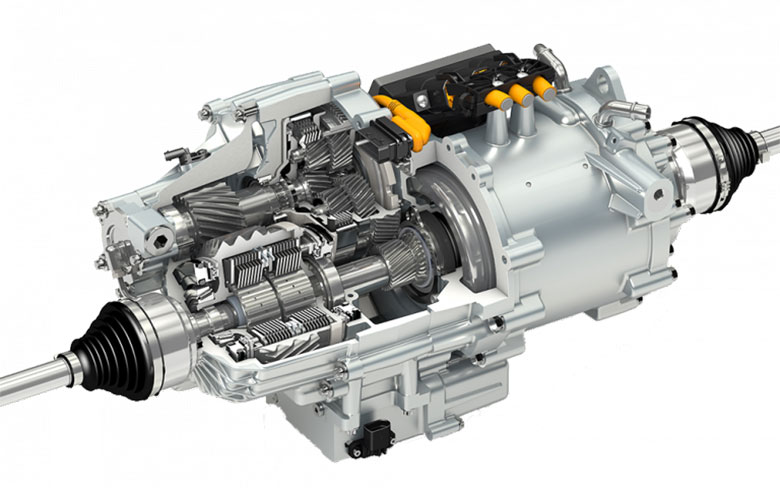
Can you talk about your Torque Vectoring Twinster eDrive System

Of those three areas I mentioned (traction, stability, and agility), this product fits into the agility segment. 

The Twinster eDrive is a combination of our high-end all-wheel-drive torque management system coupled with a torque generation device. It’s typically a secondary drive in this configuration, with an option for the output shaft of the traction motor driving a planetary gear set for a two-speed system. 

The Twinster AWD system is used in the Ford Focus RS, and the idea is that you have the all-wheel drive system sitting on the rear axle with torque input coming via prop shafts from the front of the vehicle, where the torque is generated from the engine. Two separate clutches allow you to transfer that input torque out to the wheels independently, and that individual torque control allows you to bias it in a way to deliver enhanced performance. An example of this is if you’re turning left to oversteer into a turn, you can bias the torque to the right rear wheel.

When we pair the twin clutches with an electric drive unit, instead of an open differential transferring the torque to each wheel, you independently control the torque generated from the motor. 

Key Features

  • Planetary gear set shift function
  • Hydraulic Actuation
  • Active lubrication system
  • Torque vectoring
  • Dual-clutch transmission, software, and control modules

Key Technical Data

  • System Power 120 kW
  • eMotor Torque 210 Nm
  • Output Torque 3500 Nm
  • TV Torque 2000 Nm
  • Max. vehicle speed 250 kph

When you compare it to our all-wheel-drive product, it’s quite similar with independent torque transfer out to each wheel, but instead of getting torque input from the opposite axle where the engine or motor is, you’re generating that torque from the traction motor. 

Can you walk us through the modular approach to eDrives, and give an example product for light EVs?

We believe OEMs need a platform-based approach to electric drive systems, and it needs to be planned out in a way that allows reuse from application to application while still allowing the flexibility that the customer needs to make the product theirs. Our modular eDrives are designed around increasing reusability with building blocks that can plug from one system to another, saving resources and speeding up time to market. 

All of our eDrives can be supplied as 3-in-1 with the inverter, motor, and transmission with software and controls fully integrated, sourced as 2-in-1 systems, or as single modules or components.

For compact cars, we have a single-speed coaxial eDrive system, which is the smallest and lightest of GKN Automotive’s solutions for pure electric and hybrid applications. Its space-saving design enables it to package in the same space as a platform’s rear drive module.
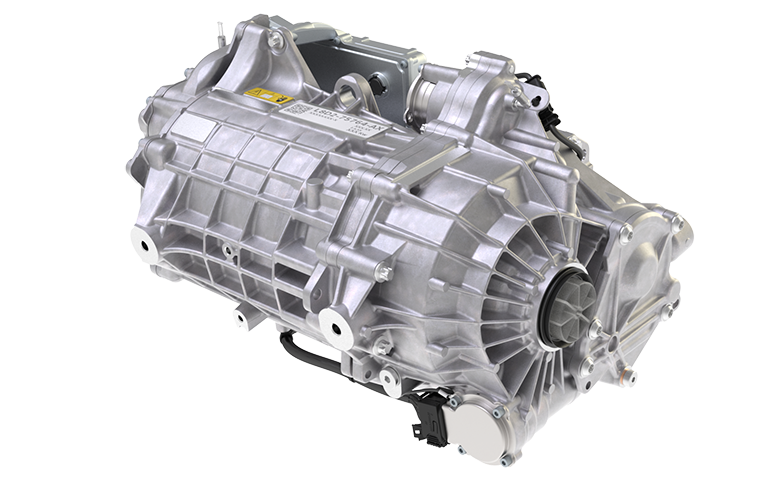
The low weight is achieved through the semi-integration of the eDrive module, and a unique electronic disconnect differential (EDD) module decouples the electric motor from the driveline at higher vehicle speeds to enhance system efficiency.

Key Features

  • Integrated active motor components
  • Park lock system
  • Disconnect system
  • High power/torque density

Key Technical Data

  • System power 90 kW
  • eMotor torque 250 Nm
  • Output torque 2900 Nm
  • Weight 76kg

Can you walk us through the inverter technology you offer? 

Our inverter lineup is flexible, we offer both 400 and 800-volt architecture, silicon, and silicon carbide. We designed a modular platform with a common control board between the 400 and 800-volt systems, and a large extent of the driver board that interfaces with the power module is also common. 

This modular approach helps us out with engineering development in a lot of ways, not just with electrical hardware, but with the software as well so we can remain agile by switching between architectures. 

Anything else you want to mention? 

Our reputation has a strong position that allows us to demonstrate time and time again that we can create unique high-performance products to push the boundaries of torque management.

Special thanks to Ben DeLand – Director of Electrical Hardware Engineering at GKN Automotive

Ben DeLand
Get the latest ev tech news

Thanks!

You should receive an email from Jeremy@EVTechInsider.com

Can you check to make sure you received it? 

Thanks!

You should receive an email from Jeremy@EVTechInsider.com

Can you check to make sure you received it? 

If you enjoy learning about new EV technology like this, check out our EV whitepaper and webinar library here.

LEM launches SOC estimation sensor for EVs

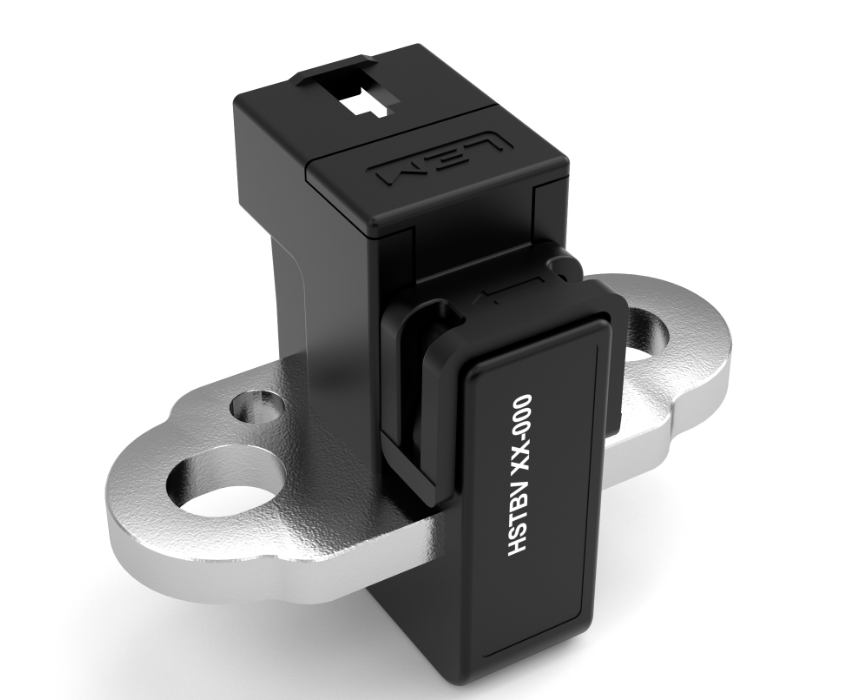
LEM has announced the launch of its new Single Monitoring Unit (SMU) sensor family, designed to enhance the performance of Full Hybrid Electric Vehicles (FHEVs),

Read More »

New LEM sensor for accurate SOC estimation across all EV technologies

SMU sensor family provides designers of automotive battery management systems with a single solution for the needs of FHEV, PHEV and BEV technologies LEM (SIX:LEHN)

Read More »

Yokogawa to Release the Lightweight, Energy Efficient OpreX Battery Web Gauge ES-5 for the Production of Battery Electrode Sheets | Yokogawa America

Yokogawa Electric Corporation announces the development of the OpreXâ„¢ Battery Web Gauge ES-5, set to be released in January 2025 as part of the OpreX

Read More »

LEM launches SOC estimation sensor for EVs

LEM has announced the launch of its new Single Monitoring Unit (SMU) sensor family, designed to enhance the performance of Full Hybrid Electric Vehicles (FHEVs),

Read More »

Nissan to launch low-cost Vehicle to Grid technology in 2026

Nissan announced it will launch affordable on-board bi-directional charging on selected electric vehicles starting in 2026. The Vehicle to Grid (V2G) technology allows EV owners

Read More »

CATL launches its ‘Freevoy Super Hybrid Battery’ for EREVs and PHEVs

CATL has announced the launch of the Freevoy Super Hybrid Battery, a hybrid vehicle battery that reportedly achieves a pure electric range of over 400

Read More »

Lyten planning $1B lithium-sulfur battery gigafactory in Nevada, up to 10 GWh per year

Lyten plans to invest over $1 billion to build the world’s first Lithium-Sulfur battery gigafactory. The facility will be located near Reno, Nevada, with the

Read More »

General Motors is planning a $145M battery cell prototype center in Warren, MI

General Motors plans to build a $145 million battery cell prototype center at its Global Technical Center campus in Warren, construction is expected to begin

Read More »

Bel Fuse launches 4kW liquid-cooled DC-DC converter for rugged EVs

Bel Fuse Inc announced the launch of the 350DNG40-12-8, a 2nd generation 4 kW liquid-cooled DC-DC converter. This converter operates from 240 to 450 VDC

Read More »

Forge Nano nabs $10M investment from GM to enhance battery cathode materials

Forge Nano announced a $10M investment from GM Ventures, adding to its recent $50 million Series C, which included participation from Hanwha, Orion Infrastructure Capital,

Read More »

Form Energy nabs $150M from DOE for its West Virginia battery plant

The U.S. Department of Energy’s Office of Manufacturing and Energy Supply Chains has selected Form Energy for an award of up to $150 million under

Read More »

KORE Power nabs conditional commitment for $850M from DOE for its battery factory in Arizona, production planned for 2024/2025

KORE Power, Inc. (KORE) has received a conditional commitment from the U.S. Department of Energy’s Loan Programs Office (LPO) for a loan in the principal

Read More »

LEM launches SOC estimation sensor for EVs

LEM has announced the launch of its new Single Monitoring Unit (SMU) sensor family, designed to enhance the performance of Full Hybrid Electric Vehicles (FHEVs),

Read More »

New LEM sensor for accurate SOC estimation across all EV technologies

SMU sensor family provides designers of automotive battery management systems with a single solution for the needs of FHEV, PHEV and BEV technologies LEM (SIX:LEHN)

Read More »

Yokogawa to Release the Lightweight, Energy Efficient OpreX Battery Web Gauge ES-5 for the Production of Battery Electrode Sheets | Yokogawa America

Yokogawa Electric Corporation announces the development of the OpreXâ„¢ Battery Web Gauge ES-5, set to be released in January 2025 as part of the OpreX

Read More »

LEM launches SOC estimation sensor for EVs

LEM has announced the launch of its new Single Monitoring Unit (SMU) sensor family, designed to enhance the performance of Full Hybrid Electric Vehicles (FHEVs),

Read More »

Nissan to launch low-cost Vehicle to Grid technology in 2026

Nissan announced it will launch affordable on-board bi-directional charging on selected electric vehicles starting in 2026. The Vehicle to Grid (V2G) technology allows EV owners

Read More »

CATL launches its ‘Freevoy Super Hybrid Battery’ for EREVs and PHEVs

CATL has announced the launch of the Freevoy Super Hybrid Battery, a hybrid vehicle battery that reportedly achieves a pure electric range of over 400

Read More »

Lyten planning $1B lithium-sulfur battery gigafactory in Nevada, up to 10 GWh per year

Lyten plans to invest over $1 billion to build the world’s first Lithium-Sulfur battery gigafactory. The facility will be located near Reno, Nevada, with the

Read More »

General Motors is planning a $145M battery cell prototype center in Warren, MI

General Motors plans to build a $145 million battery cell prototype center at its Global Technical Center campus in Warren, construction is expected to begin

Read More »

Bel Fuse launches 4kW liquid-cooled DC-DC converter for rugged EVs

Bel Fuse Inc announced the launch of the 350DNG40-12-8, a 2nd generation 4 kW liquid-cooled DC-DC converter. This converter operates from 240 to 450 VDC

Read More »

Forge Nano nabs $10M investment from GM to enhance battery cathode materials

Forge Nano announced a $10M investment from GM Ventures, adding to its recent $50 million Series C, which included participation from Hanwha, Orion Infrastructure Capital,

Read More »

Form Energy nabs $150M from DOE for its West Virginia battery plant

The U.S. Department of Energy’s Office of Manufacturing and Energy Supply Chains has selected Form Energy for an award of up to $150 million under

Read More »

KORE Power nabs conditional commitment for $850M from DOE for its battery factory in Arizona, production planned for 2024/2025

KORE Power, Inc. (KORE) has received a conditional commitment from the U.S. Department of Energy’s Loan Programs Office (LPO) for a loan in the principal

Read More »