Farasis Energy reports that it has validated its NCM cells, the P75 and P73, and they are confident they’re able to hit the million-mile mark while retaining 70% capacity over 15 years.
The testing:
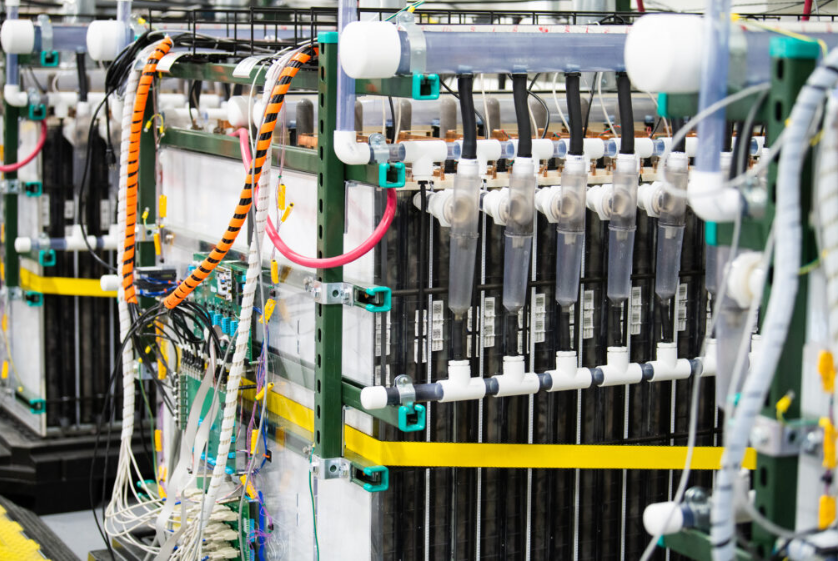
Many cells perform well under industry-standard test conditions \*25℃ and C/3 rate\*, but real-life conditions are rarely ideal. Farasis Energy says it has tested them using strenuous usage scenarios, including fast charging \*equivalent to charging a battery from 10% to 80% in around 20 minutes for P75 and around 30 minutes for P73\* and a high depth of discharge of 90% and above.


Tests were conducted at varying temperatures \*25 to 35℃\* representative of major automotive markets like the coastal United States, Western Europe, and China. Additionally, its test fixtures emulate the variable pressure conditions encountered in real-life battery packs/modules, ensuring realistic testing conditions.


Advanced Materials and Technology:
The long cycle life is achieved through advanced materials and charging strategies. The separators are coated with semi-solid gel to reduce the amount of electrolyte while ensuring excellent ion conductivity and chemical stability. The cathode and anode materials reportedly have excellent stability, and the electrolyte and electrode interface are optimized for improved performance.
The charging strategy is optimized to reduce lithium plating and heat generation, effectively suppressing the side reactions that cause capacity loss.
High Energy Density and Safety Features:
Battery packs with these cells not only offer long life but also high energy density, 20 to 30-minute fast charging, and thermal propagation mitigation. These cells are currently mass-produced for high-end passenger cars such as Voyah, the premium arm of State-owned Dongfeng, and Mercedes-Benz, as well as for commercial vehicles and other long-life applications.
The cells achieve up to 285 Wh/kg energy density, providing an additional range of 300km for heavy-duty trucks compared to LFP-based battery packs.
Farasis has also developed unique packaging technologies to ensure safe operation. These technologies mitigate risks associated with thermal propagation by using a directional exhaust system, multisided thermal barrier protection for each cell, thermoelectric separation, and phase change materials to absorb heat during thermal events. These innovative measures effectively prevent the spread of thermal propagation, significantly enhancing cell-level safety.
Commercial Vehicle Applications:
While only 1% of consumer vehicles reach 200,000 miles, commercial vehicles like buses, and heavy-duty trucks, frequently achieve this milestone. Traditionally served by diesel engines, commercial vehicles can benefit from the lower operating costs of electric powertrains, which are half that of diesel engines when considering maintenance and fuel/electricity costs. Long-lasting battery packs in commercial vehicles provide significant financial and environmental benefits to operators and the public.
Top players in the electric vehicle takeoff and landing \*eVToL\* market have independently evaluated these cells, finding them to last over 10,000 flight cycles, thus choosing our pouch cells over cylindrical and prismatic cells.
Source