Interview: Syensqo’s new long-fiber thermoplastic for thermal runaway protection withstands 1000°C for over 10 minutes

Syensqo, previously part of Solvay Group, has unveiled its latest long-fiber thermoplastic material for EV powertrains, Xencor™ XTreme. 

It addresses thermal runaway propagation in EV battery packs, and it’s applied in battery components such as overmolded busbars, module end plates and fixtures, or anything within the pack where a thermal runaway barrier is needed. 

This new material builds on their existing Xencor product family, currently used in slot wedges and as a replacement for metals in 48V battery enclosures. 

Thanks!

You should receive an email from Jeremy@EVTechInsider.com

Can you check to make sure you received it? 

It’s designed to withstand temperatures of 1000°C for over 10 minutes, with a V-0 UL 94 flammability rating. It has best-in-class electrical insulation with a comparative tracking index of >600 volts and high dielectric strength.

Can you give us a short background on Xencor Xtreme?

Xencor is the brand name of our long-fiber thermoplastic products. Our short fiber products are typically around 200 microns, while the glass-based Xencor materials are around 400 microns in length, enhancing mechanical strength and giving much higher performance and ductility. 

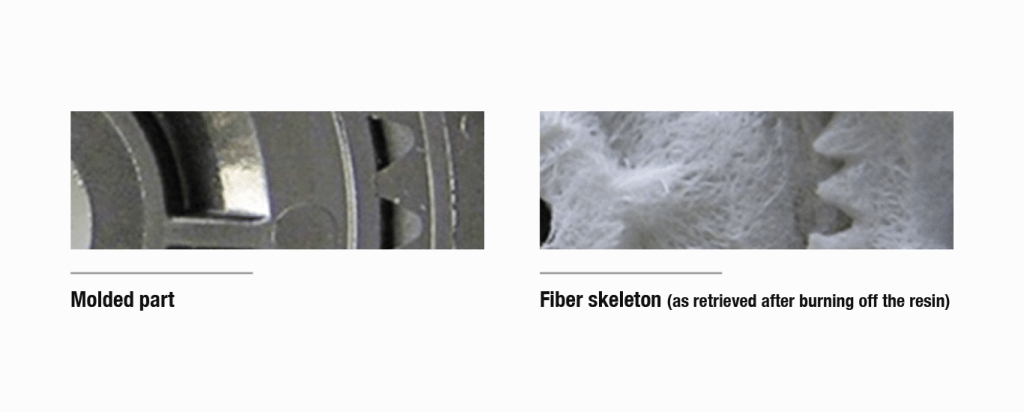
Xencor long fiber thermoplastics work by creating a unique 3D entangled long fiber network inside of an injection molded part, forming a strong fiber skeleton, ensuring dimensional stability, and improving thermal and mechanical properties compared to traditional highly filled short-fiber plastics.
Can you walk us through the benefits of long-fiber vs short-fiber compounds for EV battery applications?

This spider diagram shows the mechanical comparison of the Xencor long fiber compounds to short fiberglass compounds:

As you can see, the long-fiber compound has a few key properties that enhance the thermal and mechanical performance. 

The modulus strength (both tensile and flex) is improved not only at room temperature but also above the glass transition temperature of the polymer. It maintains its mechanical strength and stiffness even at higher temperatures, critical for EV battery packs.

Impact strength is also enhanced when we use long fibers, allowing the material to resist shock and absorb mechanical forces. 

What’s the material made of?

Xencor Xtreme compound is formulated using our polyphthalamide (PPA) specialty polymer. 

Our team has a key interest in creating high-performance materials to meet OEM requirements while keeping sustainability in mind. Amodel Bios (the PPA) is partially bio-based, with the lowest global warming potential (GWP) of products within this family, and the resin is produced at our August, Georgia plant with 100% renewable electricity. 

What questions are engineers typically asking?

Thermal resistance is the first requirement engineers ask for and Xencor Xtreme’s UL torch and grit testing showed 1000°C for 10-minute flame resistance. It’s also designed with a V-0 UL 94 flammability rating, commonly required for battery systems. This gives passengers ample time to exit the vehicle in the case of a thermal event, meeting the latest global regulations in Europe, China, the USA, and other countries. 

Engineers also ask about the manufacturing advantages of injection molding, of which there are several. For instance, you can make parts with one single piece instead of several pieces, and it likely eliminates secondary processes like welding or machining. This allows tier-1/OEMs to consolidate their lines while enhancing the thermal and mechanical properties of the end product. This becomes a huge benefit for mass production economics.

Weight is also a big point, in general when you switch from metal to plastic, you reduce weight by about 25%, and the specific gravity of this product is 1.454 grams per centimeter. This gives the pack designers design freedom, which they can use to keep pack weight down and save space, or increase the power density of the pack to increase range while maintaining the same size and weight. 

Finally, companies ask about the performance with various battery chemistries. Regardless of the chemistry, it’s chemically resistant and dimensionally stable compared to other polyamide incumbent materials. It also has much less water uptake than other polyamides. 

What’s next from Syensqo? 

Syensqo has a very broad portfolio of materials to enhance the safety and performance of electric motors, batteries, and power electronics. Syensqo materials are used in 85% of nearly every flying vehicle and 50% of electric cars.

One key product that we’re heavily investing in is polyvinylidene fluoride (PVDF), a highly non-reactive thermoplastic fluoropolymer with great flame-retardant properties. 

In 2023, Syensqo was awarded a $178.2 million grant from the US Department of Energy to help build a facility at its Augusta, GA site. Construction is expected to begin in 2024, with the site operational by 2026. More than half of US car sales are projected to be electric by 2030 and US-produced PVDF, a thermoplastic fluoropolymer, will ensure domestic security of supply for the rapidly growing electric vehicle (EV) battery market, and also meet the needs of the growing US domestic energy storage market. Syensqo’s new operations will provide material for more than five million EV batteries per year at full capacity and will create hundreds of jobs across the value chain.

Special thanks to Brian Baleno for the interview!

Get the latest ev tech news

Thanks!

You should receive an email from Jeremy@EVTechInsider.com

Can you check to make sure you received it? 

Thanks!

You should receive an email from Jeremy@EVTechInsider.com

Can you check to make sure you received it? 

If you enjoy learning about new EV technology like this, check out our EV whitepaper and webinar library here.

LEM launches SOC estimation sensor for EVs

LEM has announced the launch of its new Single Monitoring Unit (SMU) sensor family, designed to enhance the performance of Full Hybrid Electric Vehicles (FHEVs),

Read More »

New LEM sensor for accurate SOC estimation across all EV technologies

SMU sensor family provides designers of automotive battery management systems with a single solution for the needs of FHEV, PHEV and BEV technologies LEM (SIX:LEHN)

Read More »

Yokogawa to Release the Lightweight, Energy Efficient OpreX Battery Web Gauge ES-5 for the Production of Battery Electrode Sheets | Yokogawa America

Yokogawa Electric Corporation announces the development of the OpreX™ Battery Web Gauge ES-5, set to be released in January 2025 as part of the OpreX

Read More »

LEM launches SOC estimation sensor for EVs

LEM has announced the launch of its new Single Monitoring Unit (SMU) sensor family, designed to enhance the performance of Full Hybrid Electric Vehicles (FHEVs),

Read More »

Nissan to launch low-cost Vehicle to Grid technology in 2026

Nissan announced it will launch affordable on-board bi-directional charging on selected electric vehicles starting in 2026. The Vehicle to Grid (V2G) technology allows EV owners

Read More »

CATL launches its ‘Freevoy Super Hybrid Battery’ for EREVs and PHEVs

CATL has announced the launch of the Freevoy Super Hybrid Battery, a hybrid vehicle battery that reportedly achieves a pure electric range of over 400

Read More »

Lyten planning $1B lithium-sulfur battery gigafactory in Nevada, up to 10 GWh per year

Lyten plans to invest over $1 billion to build the world’s first Lithium-Sulfur battery gigafactory. The facility will be located near Reno, Nevada, with the

Read More »

General Motors is planning a $145M battery cell prototype center in Warren, MI

General Motors plans to build a $145 million battery cell prototype center at its Global Technical Center campus in Warren, construction is expected to begin

Read More »

Bel Fuse launches 4kW liquid-cooled DC-DC converter for rugged EVs

Bel Fuse Inc announced the launch of the 350DNG40-12-8, a 2nd generation 4 kW liquid-cooled DC-DC converter. This converter operates from 240 to 450 VDC

Read More »

Forge Nano nabs $10M investment from GM to enhance battery cathode materials

Forge Nano announced a $10M investment from GM Ventures, adding to its recent $50 million Series C, which included participation from Hanwha, Orion Infrastructure Capital,

Read More »

Form Energy nabs $150M from DOE for its West Virginia battery plant

The U.S. Department of Energy’s Office of Manufacturing and Energy Supply Chains has selected Form Energy for an award of up to $150 million under

Read More »

KORE Power nabs conditional commitment for $850M from DOE for its battery factory in Arizona, production planned for 2024/2025

KORE Power, Inc. (KORE) has received a conditional commitment from the U.S. Department of Energy’s Loan Programs Office (LPO) for a loan in the principal

Read More »

LEM launches SOC estimation sensor for EVs

LEM has announced the launch of its new Single Monitoring Unit (SMU) sensor family, designed to enhance the performance of Full Hybrid Electric Vehicles (FHEVs),

Read More »

New LEM sensor for accurate SOC estimation across all EV technologies

SMU sensor family provides designers of automotive battery management systems with a single solution for the needs of FHEV, PHEV and BEV technologies LEM (SIX:LEHN)

Read More »

Yokogawa to Release the Lightweight, Energy Efficient OpreX Battery Web Gauge ES-5 for the Production of Battery Electrode Sheets | Yokogawa America

Yokogawa Electric Corporation announces the development of the OpreX™ Battery Web Gauge ES-5, set to be released in January 2025 as part of the OpreX

Read More »

LEM launches SOC estimation sensor for EVs

LEM has announced the launch of its new Single Monitoring Unit (SMU) sensor family, designed to enhance the performance of Full Hybrid Electric Vehicles (FHEVs),

Read More »

Nissan to launch low-cost Vehicle to Grid technology in 2026

Nissan announced it will launch affordable on-board bi-directional charging on selected electric vehicles starting in 2026. The Vehicle to Grid (V2G) technology allows EV owners

Read More »

CATL launches its ‘Freevoy Super Hybrid Battery’ for EREVs and PHEVs

CATL has announced the launch of the Freevoy Super Hybrid Battery, a hybrid vehicle battery that reportedly achieves a pure electric range of over 400

Read More »

Lyten planning $1B lithium-sulfur battery gigafactory in Nevada, up to 10 GWh per year

Lyten plans to invest over $1 billion to build the world’s first Lithium-Sulfur battery gigafactory. The facility will be located near Reno, Nevada, with the

Read More »

General Motors is planning a $145M battery cell prototype center in Warren, MI

General Motors plans to build a $145 million battery cell prototype center at its Global Technical Center campus in Warren, construction is expected to begin

Read More »

Bel Fuse launches 4kW liquid-cooled DC-DC converter for rugged EVs

Bel Fuse Inc announced the launch of the 350DNG40-12-8, a 2nd generation 4 kW liquid-cooled DC-DC converter. This converter operates from 240 to 450 VDC

Read More »

Forge Nano nabs $10M investment from GM to enhance battery cathode materials

Forge Nano announced a $10M investment from GM Ventures, adding to its recent $50 million Series C, which included participation from Hanwha, Orion Infrastructure Capital,

Read More »

Form Energy nabs $150M from DOE for its West Virginia battery plant

The U.S. Department of Energy’s Office of Manufacturing and Energy Supply Chains has selected Form Energy for an award of up to $150 million under

Read More »

KORE Power nabs conditional commitment for $850M from DOE for its battery factory in Arizona, production planned for 2024/2025

KORE Power, Inc. (KORE) has received a conditional commitment from the U.S. Department of Energy’s Loan Programs Office (LPO) for a loan in the principal

Read More »